Powered by Blogger.
RSS
Post Icon

Popular landmarks that ban selfie sticks and social media

In the age of social media ubiquity, some popular destinations are instituting selfie (or, more specifically, selfie stick) bans.
  • 1. Disney

    Reuters
    All Disney parks have banned selfie sticks on their grounds as of July 1, 2015. Previously, Disney had banned the sticks in rides where they were the most dangerous, but after complaints from visitors and employees alike they extended the ban. "We strive to provide a great experience for the entire family, and unfortunately selfie-sticks have become a growing safety concern for both our guests and cast," a rep for The Mouse told the Washington Post.
  • 2. Lollapalooza

    Courtesy Lollapalooza
    The annual summer music festival in Chicago (this year it's happening from July 31-August 2) is the first major music festival to ban selfie sticks and other similar devices. The festival organizers have added these sticks to the list of banned items, which also includes skateboards, aerosol cans, and illegal drugs.
  • 3. Sistine Chapel, Vatican City

The Sistine Chapel has banned photography, including snapping shots of its famous ceiling painted by Michelangelo. This rule has nothing to do with overcrowding or trying to move people along more quickly, though. The ban dates to 1980, when the Vatican raised $3 million in necessary renovation funds from Japan’s Nippon Television Network in exchange for exclusive photo and video rights to the art within. Though the ban is still technically in place, enforcement isn’t very strict and plenty of tourists have been able to snap pictures.

  • 4. Lake Tahoe, California/Nevada

    iStock
    Staff at Lake Tahoe, on the California-Nevada border, are asking visitors not to take pictures of bears, especially selfies that have them turning their backs to said bears. A recent uptick in the number of selfies with bears in the background are “presenting a safety issue,” according to a spokesperson for the park. It’s possible that they’re thinking about a 2013 incident where a couple on safari were gored by rhinos after their guide suggested they get closer to the animals for a better photo.
  • 5. The Van Gogh Museum, Amsterdam

    AP File Photo
    Amsterdam’s Van Gogh Museum has a contentious relationship with social media and photography. The institution had a photography ban, repealed it in May 2013, then re-instituted the ban in March 2014. The museum said that photography there, one of Amsterdam’s most popular tourist sites, “caused tension between those wishing to photograph and those wishing to view the paintings.”
  • 6. Mecca, Saudi Arabia

    iStock
    The hajj, a trip to the holy city of Mecca, is one of the most important requirements in Islam. But the rise of technology is causing conflict as younger Muslims use social media to document their pilgrimages. Several prominent clerics and scholars have asked people to refrain from posting selfies, especially of them visiting or touching holy sites, claiming that such photos go against Islamic principles of modesty.

  • Digg
  • Del.icio.us
  • StumbleUpon
  • Reddit
  • RSS
Post Icon

Legoland first theme park to have own currency listed on exchange board


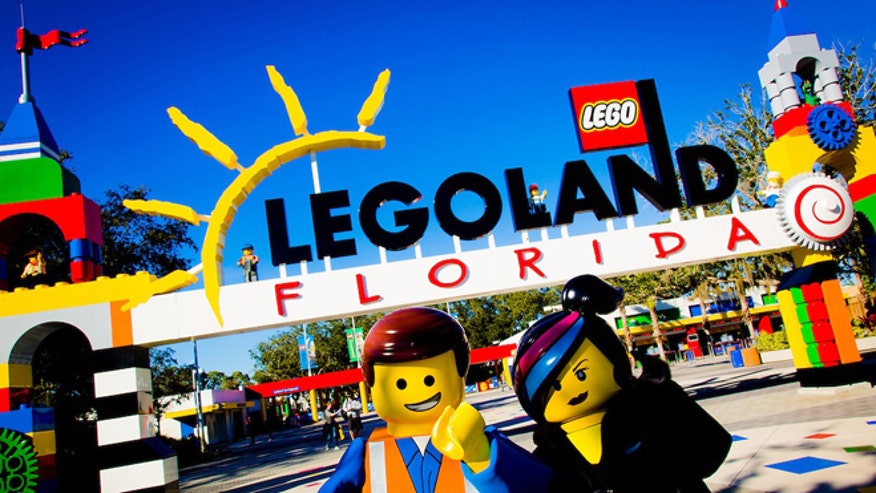
Legoland Florida Resort has made history all while making guests' experience more authentic.
The theme park announced Wednesday that it has entered a partnership with independent foreign exchange business Travelex to list its official currency, Legoland Dollars, on the company's exchange boards at dozens of locations.
The partnership makes Legoland Florida Resort the first theme park to have its official money listed on a currency exchange board.
"Everything at Legoland Florida Resort is created for kids, including the currency. By using Legoland Dollars with a playful design, it builds on the immersive experience for young guests," said Legoland Florida Resort general manager Adrian Jones in a statement. "Although we accept U.S. currency, only Legoland Dollars will get you an additional $39.25 in added value."
The exchange rate to the U.S. dollar is 1:1, but guests who exchange $50 will receive $50 in Legoland Dollars as well as other exclusive benefits, including free parking and an upgrade to the Legoland Water Park, among others.
Most importantly, possessing the unique currency will provide added convenience for guests, with Legoland Florida Resort's restaurants, concessions and shops accepting Legoland Dollars.
Keep in mind that Legoland Dollars — available for a limited time but through the 2015 summer season — can only be purchased with U.S. currency and the minimum exchange guests can make is $5. Legoland Dollars aren't redeemable for cash and are nonrefundable, states Travelex's official website.
Travelers can purchase Legoland Dollars at one of 55 different Travelex locations, including locations at Tampa International Airport, John F. Kennedy International Airport, LaGuardia Airport and Hartsfield-Jackson Atlanta International Airport.

  • Digg
  • Del.icio.us
  • StumbleUpon
  • Reddit
  • RSS
Post Icon

Forget Instagram: Study reveals health risks of frequent travel


By now you probably know how to spot frequent travelers on your social feed: they Instagram pictures with a different location tag every week, constantly check in to airports on Facebook, and have international geofilters on their Snapchat stories.
But according to a new study, those people who engage in frequent travel – known as “hypermobility” – may experience adverse psychological, emotional, and physical effects. 
Though it seems fun online, research shows that kind of jet setting has a hidden “dark side.”
“Social media encourages competition between travelers to ‘check-in’ and share content from far-flung destinations,” said study co-author Dr. Scott Cohen. “The reality is that most people who are required to engage in frequent travel suffer high levels of stress, loneliness, and long-term health problems.”
Some other consequences include: jet lag, sleep deprivation, deep vein thrombosis (blood clots), and radiation exposure. Cohen also mentions environmental risks of higher greenhouse gas emissions. The study was conducted by the Universities of Surrey, U.K. and Lund, Sweden.
This information comes at a fitting time, as travel bloggers and Instagrammers are in their heyday.
Take Murad Osmann, for example, whose #FollowMeTo photos – where his wife leads him with an outstretched arm towards a picturesque destination ahead – went viral on Instagram and beyond. He currently has 3.2 million followers.
But there are negatives to this glamorized version of travel that you see on your screen – which really only occurs among the elite and upper class. Besides jet lag, there’s fatigue and an increased exposure to germs and radiation. People who travel more than 85,000 miles per year (like flying from New York to Seattle round-trip every three weeks) exceed the safe limit for human radiation exposure. The risk of cancer is also higher in-flight than on the ground.
On the emotional and social front, hypermobility can create “travel disorientation,” which comes from a combination of a constant change of place and the stress of planning trips (and anticipating how many emails you’ll have to read when you return).
The study also mentions that frequent travel, mostly for business, is done solo and causes loneliness, weakened friendships, and “a reduced ability to participate in family life.”
“Society needs to recognize that the jet-set lifestyle is not all it’s made out to be,” Dr. Cohen added. “By striving to travel far, wide, and frequently we are damaging the environment, ourselves, and potentially our closest loved ones.”


  • Digg
  • Del.icio.us
  • StumbleUpon
  • Reddit
  • RSS
Post Icon

Country singer Jake Owen's favorite water sports


Country music sensation Jake Owen is not only known for his summertime hits, such as "Beachin" and "Summer Jam", but his love of water sports.
Owen, who grew up on the coastal town of Vero Beach, Florida, always finds time to get on the water.  An avid wakesurfer, boater and fisherman, he says water is how he unwinds. 
Owen’s love of boating is captured in “Stories of Discovery,” a documentary series developed by Discover Boating, a campaign by the North American recreational boating industry to promote water sports.  They've hit the road with Owen to inspire fans to discover life on the water and share their boating stories.
So what water sports get Owen's engine running? 
--Wakeboarding and wakesurfing are something Owen regularly does during his time off.  The difference between the two sports is that in wakeboarding you get towed by the boat, while wakesurfing, you use the boat to get you up and then you're on your own to surf. Owen's favorite spot for this is on Center Hill Lake in Middle Tennessee, about 60 miles from his Nashville home. 
--Stand-up paddle boarding is great exercise and a good activity to do with your friends or family. “I do that when I’m back home in Florida a lot with my mom, my family, and my little girl.”

  • Digg
  • Del.icio.us
  • StumbleUpon
  • Reddit
  • RSS
Post Icon

10 emerging collector vehicles

Some short-sighted prognosticators in the classic car world have gone on record as saying that nothing built post-1972 will ever be collectible, but the unmistakable popularity of 1980s and 1990s cars in the market has illustrated the fallacy of that statement. Here are 10 up-and-comers to consider:
  • 1. 1984-89 Toyota 4Runner

    Hagerty
    Legend has it that the first-generation Toyota 4Runner came about as a way to avoid the infamous “chicken tax” that levied a 25 percent duty on all imported goods, from brandy to light trucks. Put a shell over the bed of a Toyota light pickup, install some seats in the bed and voila — a passenger vehicle. These days, the quirky 4Runner seems to be the off-road Toyota of choice for entry-level collectors now that they’re priced out of the FJ40 Land Cruiser market.

  • 2. 1990-96 Nissan 300ZX

  • Trolls will continuously spout the nonsense that the rot irretrievably set in for Nissan sports cars the day the last S30 (280/260/280Z) rolled off the line. And while Z-cars did get progressively more luxurious as time went on and Turbo models of the 280ZX and Z31 300ZX had some merit, the Z32 model that was introduced in the U.S. in 1990 was a brilliant car. Two-seater, 2+2 or convertible, they were all gorgeous and handled well. They’re still a great deal, but likely not for long.
  • 3. 1992-95 Porsche 968

    Hagerty
    Those looking for up-and-comers in the air-cooled Porsche world will find little. The train has left the station for the 911, 912 and 914, so it’s the water-cooled cars that savvy buyers are looking hard at now. The 968 is the much more scarce successor to the 944. With a massive 3.0-liter four-cylinder engine and variable valve timing, the 968 was no slouch in a straight line and one of the best balanced and sweetest handling Porsches of all time. Fewer than 13,000 were built with just under 4,700 coming to the U.S.

  • 4. 1992-2001 Mercedes SL600

    Hagerty
    The R129 SL had the unenviable task of replacing the much-loved R107 series, which ran from 1971-89. At least Mercedes didn’t bring a knife to a gunfight. The 6.0-liter V-12 model was added to the range in its third model year. With just shy of 400 hp, it was light years ahead of any previous SL performance-wise. R129 SLs are now showing up at auctions, a sure sign that they’re hitting the radar of collectors.
  • 5. 1995-99 BMW M3

    Hagerty
    The E36 M3 spelled the end for the edgy four-cylinder M3. The smooth BMW straight-six in the new M3 put out just shy of 250 hp in U.S. spec and was a wonderfully balanced handler. E36 M3s were offered in coupe, sedan and convertible body styles. Bright throwback colors like Techno Violet, Dakar Yellow and Estoril Blue are particularly sought-after but prices have yet to skyrocket for any but the rare 1995 lightweight model.

  • 6. 1981-93 Ferrari Mondial

    The Mondial has been the perennial underdog Ferrari along with the V-12 400i/412. Both are having the last laugh, but Mondial prices in particular have been climbing. Offered in 2+2 coupe and convertible body styles, the Mondial shares the revvy 308/328 flat-plane crank V-8 with all of the visceral thrills that entails. Striking Pininfarina looks, decent reliability, Ferrari sounds and room in back for the kids? What’s not to like?
  • 7. 1992-95 Volkswagen Corrado VR6

    Hagerty
    Looking a bit like a grown-up MK I Scirocco, the Corrado VR6 was regarded as a legitimate cult classic before it even left production. While a front-driver, its handling can’t be faulted and the narrow-angle V-6 addresses the shortcomings of every sporting VW that came before it. Good ones are rare indeed and worth keeping.

  • 8. 1998-2006 Audi TT MKI

    Hagerty
    The first-generation TT is a sure-fire emerging classic. With unmistakable styling courtesy of Freeman Thomas, it’s reminiscent of a 1950s Porsche 356 in some ways. The Bauhaus-like interior is a design freak’s dream as is the optional baseball glove interior. Now is the time to snap up a V-6 Quattro coupe.

  • 9. 1971-76 Cadillac Coupe de Ville

    Hagerty
    Chalk this one up to the perennial favorite status of Martin Scorsese films, but the full-size Cadillac de Ville of the early to mid-1970s is gaining in popularity with Gen-Xers in both the U.S. and of all places, Sweden.

  • 10. 1982-92 Pontiac Firebird Trans Am

    Hagerty
    “Smokey and the Bandit”-era T/As are now sought-after collectibles. Waiting in the wings are the “Knight Rider”-era third-generation cars. With the generation who grew up glued to the TV to see what the Hoff and KITT were up to now coming in to some disposable income, it’s only a matter of time before these cars see a serious increase in value.

  • Digg
  • Del.icio.us
  • StumbleUpon
  • Reddit
  • RSS
Post Icon

SeaWorld discounts fail to boost declining park attendance


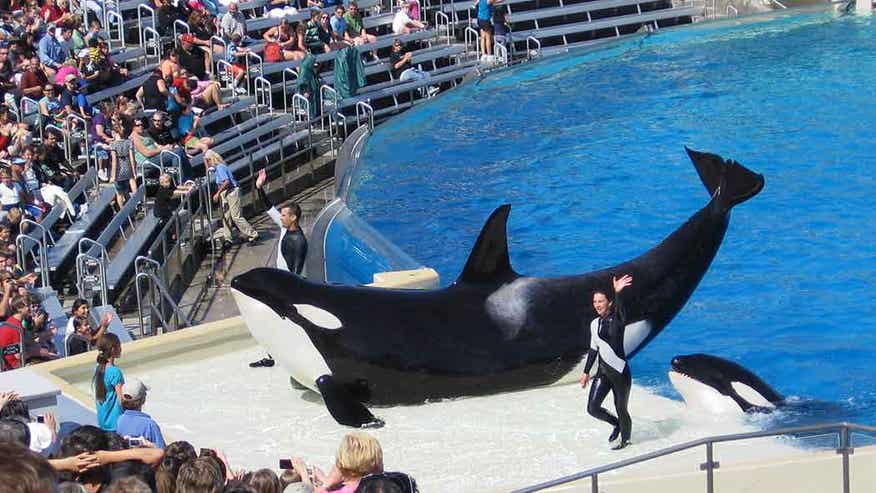
SeaWorld says its theme park attendance is still falling as animal activists protest the company's treatment of whales, but the company says some of its parks are doing better as it prepares to launch a pair of new roller coasters.

The company also maintained its annual outlook, and its shares rose more than 4 percent.
SeaWorld has been trying to recover from the 2013 documentary film "Blackfish" that suggested its treatment of captive orcas provokes violent behavior. Park attendance dropped after the release of the documentary and the company's stock has fallen 50 percent over the last two years.

The company says attendance at the original Sea World, in San Diego, is still hurting. Legislators in California have proposed banning performances featuring orcas, which has kept criticism of SeaWorld in the news. The company says business in its Florida parks was better in the second quarter and says the biggest problem at those locations is tough competition, not fallout from "Blackfish." Its overall attendance fell about 2 percent.

New President and CEO Joel Manby said in May that competing theme parks in Orlando have done a better job of adding exciting attractions. The company is preparing a shark-themed roller coaster at SeaWorld Orlando and an Egypt-themed coaster at Busch Gardens Tampa. Both are scheduled to open in 2016.

A year ago the company also said it will build new, larger orca environments at its parks. The first such tank will be in San Diego and it will open to the public in 2018.
SeaWorld Entertainment Inc. runs 11 theme parks, including three SeaWorld locations and two Busch Gardens parks. Its second-quarter profit and revenue both fell short of expectations. On top of the hit to its reputation, SeaWorld said heavy rain in Texas and earlier Spring Break vacations hurt attendance at its parks.

  • Digg
  • Del.icio.us
  • StumbleUpon
  • Reddit
  • RSS
Post Icon

How to add a backup camera to your car


Rearview, or backup, cameras have become increasingly common on new cars, adding a measure of safety and convenience when reversing. If your late-model car is not so equipped, there’s an aftermarket retrofit available that will work as well as a factory original. 
Mounting evidence shows that rearview cameras help avoid accidents that involve backing into an object or—worse—a child invisible from the driver’s seat. According to National Highway Traffic Safety Administration (NHTSA), if all cars had rearview cameras, about 60 lives a year could be saved in the U.S. We consider a rearview camera a must have, especially for an SUV, pickup truck, or any other vehicle with a big blind zone straight back. But beyond the life-saving potential, a rear camera is a welcomed convenience that you would appreciate every day, as you back out of or into parking spots.
If your car was produced in the last decade, chances are it already has a display screen in the dash used for at least audio functions. These screens can often be used with camera retrofit kits, enabling a very tidy installation. Good packages start around $120 for the Japanese brands and go up to about $600 for the German brands. The kits contain the lens, a camera module for the screen and all necessary wiring and connectors. No splicing of wires is required. This style is much better than some cheapo alternatives that can leave a lens dangling above the license plate or attach a fuzzy screen to the rearview mirror.
Typically, installing a proper rear camera demands some advanced do-it-yourself skills and will take about three hours due to the careful removal of the rear hatch lining and other trim running all the way to the dashboard. This requires care and expertise. But not everyone has the time or skills to take on such a project in their own driveway. Unfortunately, franchised car dealers are reluctant to install these aftermarket retrofits, and we’ve found nationwide chains like AutoZone and Pep Boys won’t perform such installations, either. The good news is that Best Buy’s Geek Squad will do the installation for $99. Many local car audio/electronics shops can also perform the installation.
Here’s a list of vehicles that already have the infrastructure to be compatible with a model-specific aftermarket rearview camera:
BrandPrerequisiteAs of . . .
Chrysler/Dodge/JeepmyGig screen2006 and later
Ford/LincolnMyFord/MyLincoln Touch2011 and later
Buick/Cadillac/Chevrolet/GMCColor screen2007 and later
HondaColor screen2011 and later
MazdaColor screen2012 and later
Mercedes-BenzCOMAND screen2006 and later
SubaruColor screen2013 and later
Toyota/LexusColor screen2008 and later
Volkswagen/AudiRadio/navigation screen2009 and later
I bought such a kit online from BimmerTech for my wife’s 2011 BMW X3 for about $600. Having a shop and a few qualified technicians at the Consumer Reports Auto Test Center certainly made installation a lot easier than it would be otherwise. The kit contains a camera integrated into a rear-hatch handle, a few wiresets, and a computer module.
Once installed, the camera automatically took over the screen when the car was put in Reverse. The model I bought came with optional guidelines on the screen, aiding backup maneuvers. All told, this was a nice upgrade that was worth the investment.
Many brand-specific retrofit modules are available. Just search online for your car's model and "rear camera retrofit." You can also find them from major online retailers, such as Amazon and Crutchfield, or specialty online sites, such as Coastal Tech (focus on Detroit 3 upgrades). 
If you had new-car envy because of this helpful feature, know that there are upgrades available.

  • Digg
  • Del.icio.us
  • StumbleUpon
  • Reddit
  • RSS