Powered by Blogger.
RSS
Showing posts with label Travel. Show all posts
Post Icon

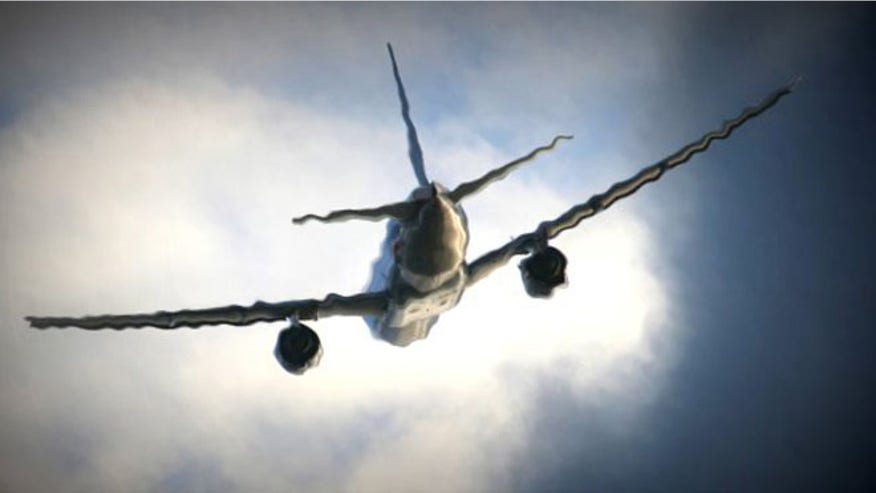
Demystifying flying: What is an air pocket?


If you’ve been a passenger in an airplane, it’s likely that you have felt an “air pocket,” or what feels like a quick drop in the air. 
"Air pocket" is merely another term for ordinary turbulence. You might feel as if you're falling from the sky, but rest assured, if you flying commercially, you rarely gain or lose more than about twenty feet, especially if the plane is on autopilot.
The term "air pocket" comes from early aviation, a time when pilots flying open-cockpit biplanes took adventurous locals on a rides in their “flying machines.” These planes, with two wings one above the other, flew at relatively slow speeds. When the plane entered air that, instead of simply sitting there, was flowing slightly upward or slightly downward, the plane's path was altered slightly upward or slightly downward.  Air pockets do not technically exist, yet it's an expression that has caught on and is still misused today.
So what happens when you experience a bumpy ride that rattles glasses and turns some knuckles white?
The first thing you need to understand is a basic rule of flying: the earth has different surface temperatures that impacts flight as the aircraft passes through.  For example, the surface of a lake is cooler than the surrounding earth, or plowed fields have a different surface temperature than those that are unplowed.  Warm air is lighter than cool air. Warmed air rises. Cooled air descends. When a plane encounters varying airflow, we can feel what we call an “air pocket” today.
The idea of an "air pocket" might seem reassuring from a pilot's point of view, for a pocket is something you slip your hand into. When you do, your hand can only go so far. But, over the years, the phrase has come to be thought of as an area where there is no air. With no air, what is going to hold the plane up?  

  • Digg
  • Del.icio.us
  • StumbleUpon
  • Reddit
  • RSS
Post Icon

End of seat wars? Legroom adjustable seat can be shifted for passenger size


The airline legroom wars may finally be coming to an end.
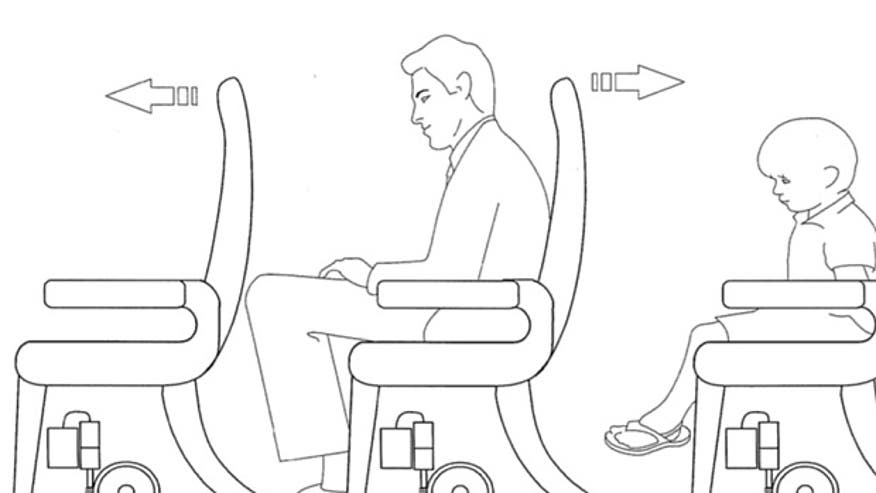
Engineering firm B/E Aerospace has filed a patent for a “legroom adjustable” seat design that allows flight attendants to move a seat forward or back depending on the size of a passenger, reports the Telegraph.
The seats, which all have moveable wheels, sit on rail tracks lining the aircraft floor. If a taller man or woman is seated in front of a child, for example, the cabin crew will have the ability to move an occupant’s seat several inches back via smartphone or tablet, allowing for extra legroom.
But the new invention may lead to complications of its own. Passengers would be required to inform airlines of their height at check-in meaning some may fudge the numbers to secure more seat space.
Still the designers believe this configuration could revolutionize the current “one size fits all” model for modern air travel, which they see as outdated.
“While passengers come in many sizes, children, adolescents, adults, men, women and with large height differentials within these categories, seat spacing in the main cabin of passenger aircraft is generally uniform except at exit rows,” the designers stated in their patent application, submitted in November. 
“The one size fits all seating arrangement can cause discomfort for tall passengers, while a child or relatively small adult may be seated in an identical seat at the seat pitch, with more than ample leg room and in relative comfort.”
A controversial device called the Knee Defender-- a set of detachable rubber grips that prevent passengers from reclining into the space of the user behind them-- caused a serious inflight incident that led to the grounding of a United Airlines flight in 2014. Several major U.S. carriers including Delta, United and American Airlines prohibit use of the device.
The legroom adjustable seat, however, leaves the final spatial arrangement to the discretion of crewmembers, not individual passengers.
“Even a relatively small incremental increase in seat spacing for the tall passengers can provide additional comfort with no loss of comfort to the much smaller passengers seated in front of the tall passengers,” B/E Aerospace said.

  • Digg
  • Del.icio.us
  • StumbleUpon
  • Reddit
  • RSS
Post Icon

Dollywood to open world's fastest wooden roller coaster in 2016


Dollywood has announced a new $22 million ride that the theme park says will be the world's fastest wooden roller coaster.
The eastern Tennessee park says the Lightning Rod, themed after a 1950s-era hot rod, should be ready for visitors in March 2016.
The Lighting Rod will launch riders up 20 stories from a standstill to 45 mph and riders will get 20 seconds of airtime along the 3,800-foot track. The park says the coaster will hit a top speed of 73 mph on a 165-foot drop.
The $22 million price tag marks the largest single investment in the Dollywood Co.'s history.
Entertainer Dolly Parton opened Dollywood in 1986 in Pigeon Forge near the Great Smoky Mountains National Park.

  • Digg
  • Del.icio.us
  • StumbleUpon
  • Reddit
  • RSS
Post Icon

Few railroads likely to meet deadline for installing safety technology


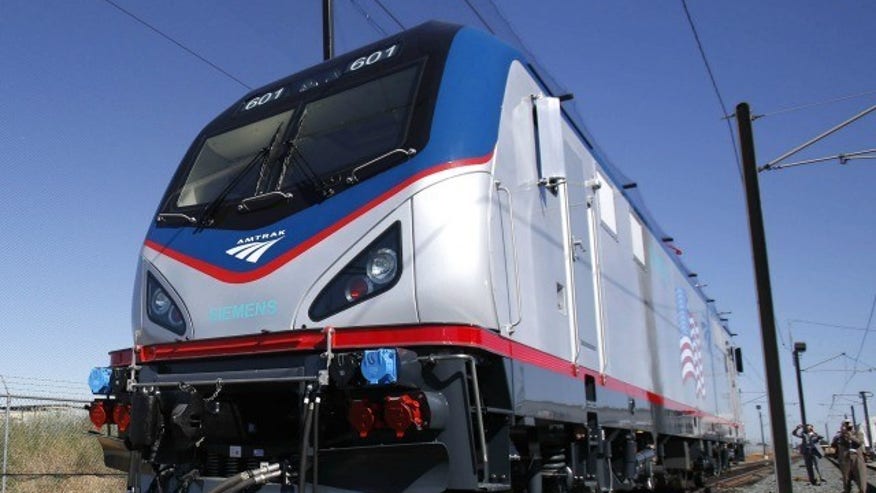
Only a handful of railroads are close to meeting a deadline this year to install safety technology that can prevent many crashes, including derailments due to excessive speed like the deadly Amtrak crash in Philadelphia in May, according to a government report released Friday.

Only three railroads have submitted safety plans to government, a necessary step before they can put the technology — positive train control, or PTC — into operation, the Federal Railroad Administration report said. They are BNSF Railway, the nation's second largest freight railroad, and two commuter railroads — Metrolink in the Los Angeles area, and the Southeastern Pennsylvania Transportation Authority in the Philadelphia area.

Amtrak hasn't submitted a plan yet, but railroad officials have said they expect to have PTC in operation in the railroad's busy Northeast Corridor by the Dec. 31 deadline.
Some railroads are lagging far behind. Union Pacific, the nation's largest freight railroad, hasn't equipped any of its 6,532 locomotives with the technology, according to the report. None of Norfolk Southern's 3,400 locomotives are equipped, either.
The type of PTC being put into place by most railroads relies on GPS, wireless radio and computers to monitor train position and automatically stop or slow trains that are in danger of derailing because they're traveling too fast, are about to collide with another train or are about to enter an area where crews are working on tracks.
A rail safety law passed by Congress in 2008 gave railroads seven years to install the technology. PTC is expensive, and many railroads were late getting started. Freight railroads often host commuter railroad operations on their tracks, and they also frequently use the tracks of their competitors. Developing PTC systems that can be used by multiple railroads has added a layer of complexity to the effort. Many railroads also ran into unanticipated difficulties acquiring the radio spectrum necessary to make the technology work, and getting government permission to erect thousands of antennas along tracks.
Railroads have been urging Congress to delay the deadline. Senate Commerce Committee Chairman John Thune, R-S.D., introduced a bill earlier this year that would have provided railroads another five to seven years to put PTC into operation.
The railroad industry said the challenge of developing the technology from scratch is unprecedented. "Reaching deadlines is important, but even more important is that when PTC is turned on, it is fully operational and enhancing safety," said Edward Hamberger, president and CEO of the Association of American Railroads.
Support for a lengthy extension diminished after accident investigators said the May 12 Amtrak crash, which killed eight people and injured about 200 others, could have been prevented if PTC had been in operation. A sweeping transportation bill passed by the Senate last month contains provisions sponsored by Thune that would give railroads another three years to install the technology, but leaves open when they must have their PTC systems certified by the government, a necessary step before the systems can be put into operation.
The bill also provides $200 million to help commuter railroads install the technology.
The National Transportation Safety Board has been urging railroads to install PTC or precursor train control technologies for more than four decades. The board has said that over that time it has investigated 145 PTC-preventable accidents in which more than 300 people were killed and 6,700 injured.

  • Digg
  • Del.icio.us
  • StumbleUpon
  • Reddit
  • RSS
Post Icon

Popular landmarks that ban selfie sticks and social media

In the age of social media ubiquity, some popular destinations are instituting selfie (or, more specifically, selfie stick) bans.
  • 1. Disney

    Reuters
    All Disney parks have banned selfie sticks on their grounds as of July 1, 2015. Previously, Disney had banned the sticks in rides where they were the most dangerous, but after complaints from visitors and employees alike they extended the ban. "We strive to provide a great experience for the entire family, and unfortunately selfie-sticks have become a growing safety concern for both our guests and cast," a rep for The Mouse told the Washington Post.
  • 2. Lollapalooza

    Courtesy Lollapalooza
    The annual summer music festival in Chicago (this year it's happening from July 31-August 2) is the first major music festival to ban selfie sticks and other similar devices. The festival organizers have added these sticks to the list of banned items, which also includes skateboards, aerosol cans, and illegal drugs.
  • 3. Sistine Chapel, Vatican City

The Sistine Chapel has banned photography, including snapping shots of its famous ceiling painted by Michelangelo. This rule has nothing to do with overcrowding or trying to move people along more quickly, though. The ban dates to 1980, when the Vatican raised $3 million in necessary renovation funds from Japan’s Nippon Television Network in exchange for exclusive photo and video rights to the art within. Though the ban is still technically in place, enforcement isn’t very strict and plenty of tourists have been able to snap pictures.

  • 4. Lake Tahoe, California/Nevada

    iStock
    Staff at Lake Tahoe, on the California-Nevada border, are asking visitors not to take pictures of bears, especially selfies that have them turning their backs to said bears. A recent uptick in the number of selfies with bears in the background are “presenting a safety issue,” according to a spokesperson for the park. It’s possible that they’re thinking about a 2013 incident where a couple on safari were gored by rhinos after their guide suggested they get closer to the animals for a better photo.
  • 5. The Van Gogh Museum, Amsterdam

    AP File Photo
    Amsterdam’s Van Gogh Museum has a contentious relationship with social media and photography. The institution had a photography ban, repealed it in May 2013, then re-instituted the ban in March 2014. The museum said that photography there, one of Amsterdam’s most popular tourist sites, “caused tension between those wishing to photograph and those wishing to view the paintings.”
  • 6. Mecca, Saudi Arabia

    iStock
    The hajj, a trip to the holy city of Mecca, is one of the most important requirements in Islam. But the rise of technology is causing conflict as younger Muslims use social media to document their pilgrimages. Several prominent clerics and scholars have asked people to refrain from posting selfies, especially of them visiting or touching holy sites, claiming that such photos go against Islamic principles of modesty.

  • Digg
  • Del.icio.us
  • StumbleUpon
  • Reddit
  • RSS
Post Icon

Legoland first theme park to have own currency listed on exchange board


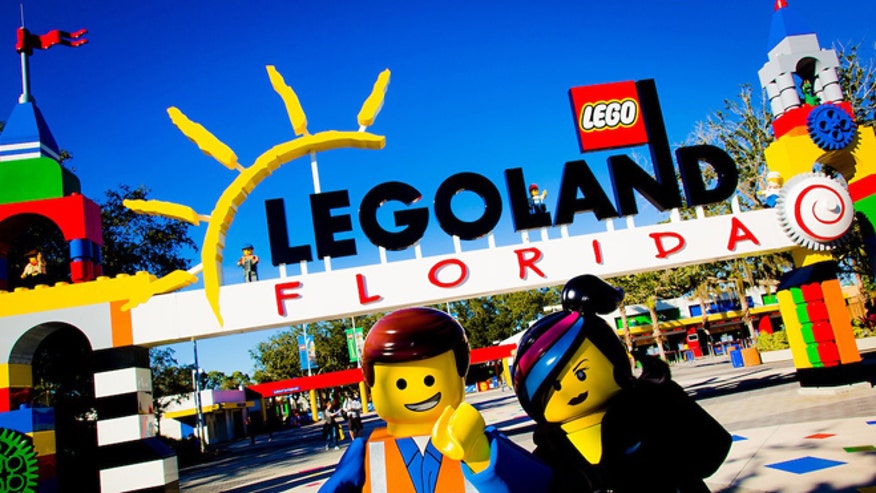
Legoland Florida Resort has made history all while making guests' experience more authentic.
The theme park announced Wednesday that it has entered a partnership with independent foreign exchange business Travelex to list its official currency, Legoland Dollars, on the company's exchange boards at dozens of locations.
The partnership makes Legoland Florida Resort the first theme park to have its official money listed on a currency exchange board.
"Everything at Legoland Florida Resort is created for kids, including the currency. By using Legoland Dollars with a playful design, it builds on the immersive experience for young guests," said Legoland Florida Resort general manager Adrian Jones in a statement. "Although we accept U.S. currency, only Legoland Dollars will get you an additional $39.25 in added value."
The exchange rate to the U.S. dollar is 1:1, but guests who exchange $50 will receive $50 in Legoland Dollars as well as other exclusive benefits, including free parking and an upgrade to the Legoland Water Park, among others.
Most importantly, possessing the unique currency will provide added convenience for guests, with Legoland Florida Resort's restaurants, concessions and shops accepting Legoland Dollars.
Keep in mind that Legoland Dollars — available for a limited time but through the 2015 summer season — can only be purchased with U.S. currency and the minimum exchange guests can make is $5. Legoland Dollars aren't redeemable for cash and are nonrefundable, states Travelex's official website.
Travelers can purchase Legoland Dollars at one of 55 different Travelex locations, including locations at Tampa International Airport, John F. Kennedy International Airport, LaGuardia Airport and Hartsfield-Jackson Atlanta International Airport.

  • Digg
  • Del.icio.us
  • StumbleUpon
  • Reddit
  • RSS
Post Icon

Forget Instagram: Study reveals health risks of frequent travel


By now you probably know how to spot frequent travelers on your social feed: they Instagram pictures with a different location tag every week, constantly check in to airports on Facebook, and have international geofilters on their Snapchat stories.
But according to a new study, those people who engage in frequent travel – known as “hypermobility” – may experience adverse psychological, emotional, and physical effects. 
Though it seems fun online, research shows that kind of jet setting has a hidden “dark side.”
“Social media encourages competition between travelers to ‘check-in’ and share content from far-flung destinations,” said study co-author Dr. Scott Cohen. “The reality is that most people who are required to engage in frequent travel suffer high levels of stress, loneliness, and long-term health problems.”
Some other consequences include: jet lag, sleep deprivation, deep vein thrombosis (blood clots), and radiation exposure. Cohen also mentions environmental risks of higher greenhouse gas emissions. The study was conducted by the Universities of Surrey, U.K. and Lund, Sweden.
This information comes at a fitting time, as travel bloggers and Instagrammers are in their heyday.
Take Murad Osmann, for example, whose #FollowMeTo photos – where his wife leads him with an outstretched arm towards a picturesque destination ahead – went viral on Instagram and beyond. He currently has 3.2 million followers.
But there are negatives to this glamorized version of travel that you see on your screen – which really only occurs among the elite and upper class. Besides jet lag, there’s fatigue and an increased exposure to germs and radiation. People who travel more than 85,000 miles per year (like flying from New York to Seattle round-trip every three weeks) exceed the safe limit for human radiation exposure. The risk of cancer is also higher in-flight than on the ground.
On the emotional and social front, hypermobility can create “travel disorientation,” which comes from a combination of a constant change of place and the stress of planning trips (and anticipating how many emails you’ll have to read when you return).
The study also mentions that frequent travel, mostly for business, is done solo and causes loneliness, weakened friendships, and “a reduced ability to participate in family life.”
“Society needs to recognize that the jet-set lifestyle is not all it’s made out to be,” Dr. Cohen added. “By striving to travel far, wide, and frequently we are damaging the environment, ourselves, and potentially our closest loved ones.”

  • Digg
  • Del.icio.us
  • StumbleUpon
  • Reddit
  • RSS
Post Icon

Country singer Jake Owen's favorite water sports


Country music sensation Jake Owen is not only known for his summertime hits, such as "Beachin" and "Summer Jam", but his love of water sports.
Owen, who grew up on the coastal town of Vero Beach, Florida, always finds time to get on the water.  An avid wakesurfer, boater and fisherman, he says water is how he unwinds. 
Owen’s love of boating is captured in “Stories of Discovery,” a documentary series developed by Discover Boating, a campaign by the North American recreational boating industry to promote water sports.  They've hit the road with Owen to inspire fans to discover life on the water and share their boating stories.
So what water sports get Owen's engine running? 
--Wakeboarding and wakesurfing are something Owen regularly does during his time off.  The difference between the two sports is that in wakeboarding you get towed by the boat, while wakesurfing, you use the boat to get you up and then you're on your own to surf. Owen's favorite spot for this is on Center Hill Lake in Middle Tennessee, about 60 miles from his Nashville home. 
--Stand-up paddle boarding is great exercise and a good activity to do with your friends or family. “I do that when I’m back home in Florida a lot with my mom, my family, and my little girl.”

  • Digg
  • Del.icio.us
  • StumbleUpon
  • Reddit
  • RSS
Post Icon

SeaWorld discounts fail to boost declining park attendance


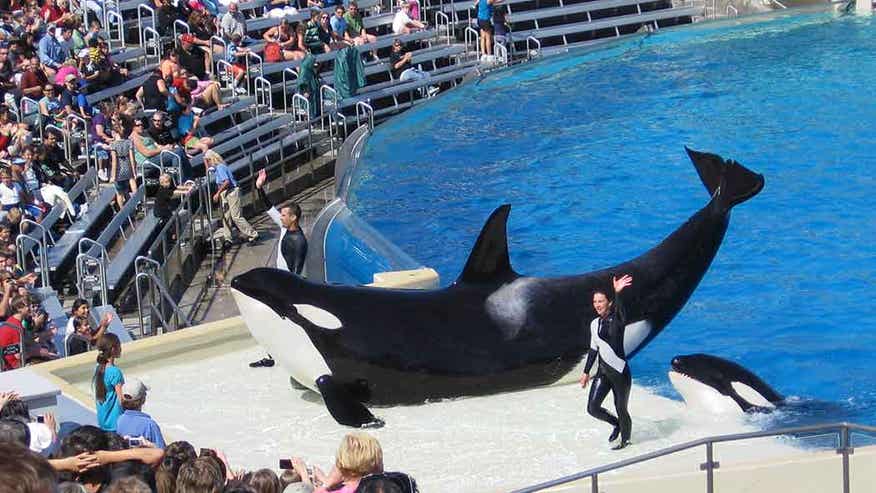
SeaWorld says its theme park attendance is still falling as animal activists protest the company's treatment of whales, but the company says some of its parks are doing better as it prepares to launch a pair of new roller coasters.

The company also maintained its annual outlook, and its shares rose more than 4 percent.
SeaWorld has been trying to recover from the 2013 documentary film "Blackfish" that suggested its treatment of captive orcas provokes violent behavior. Park attendance dropped after the release of the documentary and the company's stock has fallen 50 percent over the last two years.

The company says attendance at the original Sea World, in San Diego, is still hurting. Legislators in California have proposed banning performances featuring orcas, which has kept criticism of SeaWorld in the news. The company says business in its Florida parks was better in the second quarter and says the biggest problem at those locations is tough competition, not fallout from "Blackfish." Its overall attendance fell about 2 percent.

New President and CEO Joel Manby said in May that competing theme parks in Orlando have done a better job of adding exciting attractions. The company is preparing a shark-themed roller coaster at SeaWorld Orlando and an Egypt-themed coaster at Busch Gardens Tampa. Both are scheduled to open in 2016.

A year ago the company also said it will build new, larger orca environments at its parks. The first such tank will be in San Diego and it will open to the public in 2018.
SeaWorld Entertainment Inc. runs 11 theme parks, including three SeaWorld locations and two Busch Gardens parks. Its second-quarter profit and revenue both fell short of expectations. On top of the hit to its reputation, SeaWorld said heavy rain in Texas and earlier Spring Break vacations hurt attendance at its parks.

  • Digg
  • Del.icio.us
  • StumbleUpon
  • Reddit
  • RSS
Post Icon

Top 5 planning tools for summer travel

Summer is just around the corner, which means many are making plans for their big getaway.
Planning a trip is exciting, but it can also be exhausting. Whether it’s finding the best hotel deal, keeping track of booking information or getting directions to wherever you’re going, there are a few easy-to-use resources that can cut down the stress.
Here are my five favorite travel resources, designed to make any vacation thoroughly enjoyable from start to finish.
  • 1. Hassle-Free Planning


    TripIt
    One of the most stressful parts of planning a trip is ensuring you have all your information – hotel address, car rental information, restaurant reservations, etc. – in one place. TripIt is one of the best tools available. Just input (or email) your booking information, and you get a detailed itinerary – generated entirely by TripIt – that is accurate and easy to access. Your itinerary can be as detailed as you want, and it’s easy to share with family and friends.
  • 2. Simplified Currency Exchange


    The Converted
    When traveling abroad, trading your cash for foreign bills is a good way to get hustled.  Currency rates at money exchange booths are notoriously bad, and they’re entirely avoidable in this digital age. Try The Converted, an app for iOS and Android smartphones.  Its crisp and clear layout allows users to easily convert their own currency into the currency of the country they’re visiting. The exchange rates are updated daily, so it serves as a great baseline to make sure you’re not getting swindled. The app is also great for converting units – a function that should prove especially handy for American travelers who aren’t familiar with the metric system.
  • 3. Navigation Know-How


    Waze
    Whether traveling near or far, it’s always a good idea to have a navigational aid, and one of my favorites is Waze. This free, easy-to-use app is a huge boon whenever I’m on a road I’ve never driven before. Not only does Waze give navigational directions (including spoken turn-by-turn instructions), but it also processes information from other Waze users to calculate the worst traffic spots and provide the fastest, most efficient routes for getting around. It can add hours of vacation time that you might otherwise spend in traffic.
    Plus, you don’t need to worry about where to fill up; Waze will direct you to nearby gas stations.
  • 4. Hotel Room Bookings from Your Fingertips


    Hotwire
    Booking hotels at the 11th hour can lead to some very steep discounts. While travelers will find it simple enough to book through first-party hotel apps like Hilton or Hyatt, apps from online travel agencies can save some major cash. Hotwire’s mobile app is one such tool; it gives users access to rooms in over 125,000 hotels in more than 3,415 cities and 61 countries, and it provides savings – even on same-day bookings – of up to 60 percent.
  • 5. Get Social to Find the Best Travel Savings


    Facebook
    Some of the best vacation tools are the social networks you already use on a daily basis. Travel companies use Facebook, Twitter and other social networks to promote new deals and promotions. By using searches and hashtags, travelers can find the latest deals, including 24-hour promotional discounts and vacation giveaways.
  • 6. Bonus Tip: Get Cracking on Packing


    Packing Pro
    For those who often forget to pack all their items or check off all their to-do’s, there’s a wonderful app called Packing Pro that helps you create a packing list for your getaway based on the number of people in your group and the length of your trip. It’s a must-have for the forgetful traveler.

  • Digg
  • Del.icio.us
  • StumbleUpon
  • Reddit
  • RSS