Powered by Blogger.
RSS
Post Icon

Country singer Jake Owen's favorite water sports


Country music sensation Jake Owen is not only known for his summertime hits, such as "Beachin" and "Summer Jam", but his love of water sports.
Owen, who grew up on the coastal town of Vero Beach, Florida, always finds time to get on the water.  An avid wakesurfer, boater and fisherman, he says water is how he unwinds. 
Owen’s love of boating is captured in “Stories of Discovery,” a documentary series developed by Discover Boating, a campaign by the North American recreational boating industry to promote water sports.  They've hit the road with Owen to inspire fans to discover life on the water and share their boating stories.
So what water sports get Owen's engine running? 
--Wakeboarding and wakesurfing are something Owen regularly does during his time off.  The difference between the two sports is that in wakeboarding you get towed by the boat, while wakesurfing, you use the boat to get you up and then you're on your own to surf. Owen's favorite spot for this is on Center Hill Lake in Middle Tennessee, about 60 miles from his Nashville home. 
--Stand-up paddle boarding is great exercise and a good activity to do with your friends or family. “I do that when I’m back home in Florida a lot with my mom, my family, and my little girl.”

  • Digg
  • Del.icio.us
  • StumbleUpon
  • Reddit
  • RSS
Post Icon

10 emerging collector vehicles

Some short-sighted prognosticators in the classic car world have gone on record as saying that nothing built post-1972 will ever be collectible, but the unmistakable popularity of 1980s and 1990s cars in the market has illustrated the fallacy of that statement. Here are 10 up-and-comers to consider:
  • 1. 1984-89 Toyota 4Runner

    Hagerty
    Legend has it that the first-generation Toyota 4Runner came about as a way to avoid the infamous “chicken tax” that levied a 25 percent duty on all imported goods, from brandy to light trucks. Put a shell over the bed of a Toyota light pickup, install some seats in the bed and voila — a passenger vehicle. These days, the quirky 4Runner seems to be the off-road Toyota of choice for entry-level collectors now that they’re priced out of the FJ40 Land Cruiser market.

  • 2. 1990-96 Nissan 300ZX

  • Trolls will continuously spout the nonsense that the rot irretrievably set in for Nissan sports cars the day the last S30 (280/260/280Z) rolled off the line. And while Z-cars did get progressively more luxurious as time went on and Turbo models of the 280ZX and Z31 300ZX had some merit, the Z32 model that was introduced in the U.S. in 1990 was a brilliant car. Two-seater, 2+2 or convertible, they were all gorgeous and handled well. They’re still a great deal, but likely not for long.
  • 3. 1992-95 Porsche 968

    Hagerty
    Those looking for up-and-comers in the air-cooled Porsche world will find little. The train has left the station for the 911, 912 and 914, so it’s the water-cooled cars that savvy buyers are looking hard at now. The 968 is the much more scarce successor to the 944. With a massive 3.0-liter four-cylinder engine and variable valve timing, the 968 was no slouch in a straight line and one of the best balanced and sweetest handling Porsches of all time. Fewer than 13,000 were built with just under 4,700 coming to the U.S.

  • 4. 1992-2001 Mercedes SL600

    Hagerty
    The R129 SL had the unenviable task of replacing the much-loved R107 series, which ran from 1971-89. At least Mercedes didn’t bring a knife to a gunfight. The 6.0-liter V-12 model was added to the range in its third model year. With just shy of 400 hp, it was light years ahead of any previous SL performance-wise. R129 SLs are now showing up at auctions, a sure sign that they’re hitting the radar of collectors.
  • 5. 1995-99 BMW M3

    Hagerty
    The E36 M3 spelled the end for the edgy four-cylinder M3. The smooth BMW straight-six in the new M3 put out just shy of 250 hp in U.S. spec and was a wonderfully balanced handler. E36 M3s were offered in coupe, sedan and convertible body styles. Bright throwback colors like Techno Violet, Dakar Yellow and Estoril Blue are particularly sought-after but prices have yet to skyrocket for any but the rare 1995 lightweight model.

  • 6. 1981-93 Ferrari Mondial

    The Mondial has been the perennial underdog Ferrari along with the V-12 400i/412. Both are having the last laugh, but Mondial prices in particular have been climbing. Offered in 2+2 coupe and convertible body styles, the Mondial shares the revvy 308/328 flat-plane crank V-8 with all of the visceral thrills that entails. Striking Pininfarina looks, decent reliability, Ferrari sounds and room in back for the kids? What’s not to like?
  • 7. 1992-95 Volkswagen Corrado VR6

    Hagerty
    Looking a bit like a grown-up MK I Scirocco, the Corrado VR6 was regarded as a legitimate cult classic before it even left production. While a front-driver, its handling can’t be faulted and the narrow-angle V-6 addresses the shortcomings of every sporting VW that came before it. Good ones are rare indeed and worth keeping.

  • 8. 1998-2006 Audi TT MKI

    Hagerty
    The first-generation TT is a sure-fire emerging classic. With unmistakable styling courtesy of Freeman Thomas, it’s reminiscent of a 1950s Porsche 356 in some ways. The Bauhaus-like interior is a design freak’s dream as is the optional baseball glove interior. Now is the time to snap up a V-6 Quattro coupe.

  • 9. 1971-76 Cadillac Coupe de Ville

    Hagerty
    Chalk this one up to the perennial favorite status of Martin Scorsese films, but the full-size Cadillac de Ville of the early to mid-1970s is gaining in popularity with Gen-Xers in both the U.S. and of all places, Sweden.

  • 10. 1982-92 Pontiac Firebird Trans Am

    Hagerty
    “Smokey and the Bandit”-era T/As are now sought-after collectibles. Waiting in the wings are the “Knight Rider”-era third-generation cars. With the generation who grew up glued to the TV to see what the Hoff and KITT were up to now coming in to some disposable income, it’s only a matter of time before these cars see a serious increase in value.

  • Digg
  • Del.icio.us
  • StumbleUpon
  • Reddit
  • RSS
Post Icon

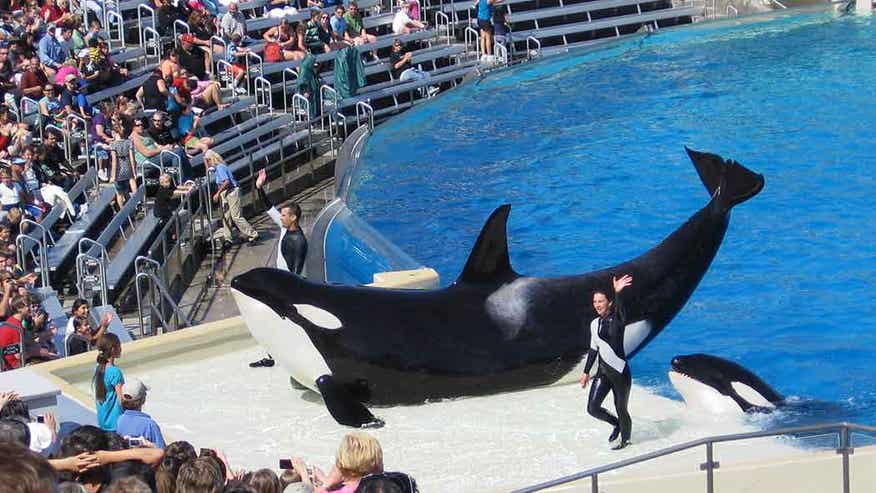
SeaWorld discounts fail to boost declining park attendance


SeaWorld says its theme park attendance is still falling as animal activists protest the company's treatment of whales, but the company says some of its parks are doing better as it prepares to launch a pair of new roller coasters.

The company also maintained its annual outlook, and its shares rose more than 4 percent.
SeaWorld has been trying to recover from the 2013 documentary film "Blackfish" that suggested its treatment of captive orcas provokes violent behavior. Park attendance dropped after the release of the documentary and the company's stock has fallen 50 percent over the last two years.

The company says attendance at the original Sea World, in San Diego, is still hurting. Legislators in California have proposed banning performances featuring orcas, which has kept criticism of SeaWorld in the news. The company says business in its Florida parks was better in the second quarter and says the biggest problem at those locations is tough competition, not fallout from "Blackfish." Its overall attendance fell about 2 percent.

New President and CEO Joel Manby said in May that competing theme parks in Orlando have done a better job of adding exciting attractions. The company is preparing a shark-themed roller coaster at SeaWorld Orlando and an Egypt-themed coaster at Busch Gardens Tampa. Both are scheduled to open in 2016.

A year ago the company also said it will build new, larger orca environments at its parks. The first such tank will be in San Diego and it will open to the public in 2018.
SeaWorld Entertainment Inc. runs 11 theme parks, including three SeaWorld locations and two Busch Gardens parks. Its second-quarter profit and revenue both fell short of expectations. On top of the hit to its reputation, SeaWorld said heavy rain in Texas and earlier Spring Break vacations hurt attendance at its parks.

  • Digg
  • Del.icio.us
  • StumbleUpon
  • Reddit
  • RSS
Post Icon

How to add a backup camera to your car


Rearview, or backup, cameras have become increasingly common on new cars, adding a measure of safety and convenience when reversing. If your late-model car is not so equipped, there’s an aftermarket retrofit available that will work as well as a factory original. 
Mounting evidence shows that rearview cameras help avoid accidents that involve backing into an object or—worse—a child invisible from the driver’s seat. According to National Highway Traffic Safety Administration (NHTSA), if all cars had rearview cameras, about 60 lives a year could be saved in the U.S. We consider a rearview camera a must have, especially for an SUV, pickup truck, or any other vehicle with a big blind zone straight back. But beyond the life-saving potential, a rear camera is a welcomed convenience that you would appreciate every day, as you back out of or into parking spots.
If your car was produced in the last decade, chances are it already has a display screen in the dash used for at least audio functions. These screens can often be used with camera retrofit kits, enabling a very tidy installation. Good packages start around $120 for the Japanese brands and go up to about $600 for the German brands. The kits contain the lens, a camera module for the screen and all necessary wiring and connectors. No splicing of wires is required. This style is much better than some cheapo alternatives that can leave a lens dangling above the license plate or attach a fuzzy screen to the rearview mirror.
Typically, installing a proper rear camera demands some advanced do-it-yourself skills and will take about three hours due to the careful removal of the rear hatch lining and other trim running all the way to the dashboard. This requires care and expertise. But not everyone has the time or skills to take on such a project in their own driveway. Unfortunately, franchised car dealers are reluctant to install these aftermarket retrofits, and we’ve found nationwide chains like AutoZone and Pep Boys won’t perform such installations, either. The good news is that Best Buy’s Geek Squad will do the installation for $99. Many local car audio/electronics shops can also perform the installation.
Here’s a list of vehicles that already have the infrastructure to be compatible with a model-specific aftermarket rearview camera:
BrandPrerequisiteAs of . . .
Chrysler/Dodge/JeepmyGig screen2006 and later
Ford/LincolnMyFord/MyLincoln Touch2011 and later
Buick/Cadillac/Chevrolet/GMCColor screen2007 and later
HondaColor screen2011 and later
MazdaColor screen2012 and later
Mercedes-BenzCOMAND screen2006 and later
SubaruColor screen2013 and later
Toyota/LexusColor screen2008 and later
Volkswagen/AudiRadio/navigation screen2009 and later
I bought such a kit online from BimmerTech for my wife’s 2011 BMW X3 for about $600. Having a shop and a few qualified technicians at the Consumer Reports Auto Test Center certainly made installation a lot easier than it would be otherwise. The kit contains a camera integrated into a rear-hatch handle, a few wiresets, and a computer module.
Once installed, the camera automatically took over the screen when the car was put in Reverse. The model I bought came with optional guidelines on the screen, aiding backup maneuvers. All told, this was a nice upgrade that was worth the investment.
Many brand-specific retrofit modules are available. Just search online for your car's model and "rear camera retrofit." You can also find them from major online retailers, such as Amazon and Crutchfield, or specialty online sites, such as Coastal Tech (focus on Detroit 3 upgrades). 
If you had new-car envy because of this helpful feature, know that there are upgrades available.

  • Digg
  • Del.icio.us
  • StumbleUpon
  • Reddit
  • RSS
Post Icon

How automakers are trying to stop hackers from taking over your car


When researchers at two West Coast universities took control of a General Motors car through cellular and Bluetooth connections in 2010, they startled the auto industry by exposing a glaring security gap.
Five years later, two friendly hackers sitting on a living room couch used a laptop computer to commandeer a Jeep from afar over the Internet, demonstrating an even scarier vulnerability.
“Cars don’t seem to be any more secure than when the university guys did it,” says Charlie Miller, a security expert at Twitter, who along with well-known hacker and security consultant Chris Valasek, engineered the attack on the Jeep Cherokee.
Fiat Chrysler, the maker of Jeeps, is now conducting the first recall to patch a cybersecurity problem, covering 1.4 million Jeeps. Experts and lawmakers are warning the auto industry and regulators to move faster to plug holes created by the dozens of new computers and the growing number of Internet connections in today’s automobiles.

  • Digg
  • Del.icio.us
  • StumbleUpon
  • Reddit
  • RSS
Post Icon

2015 Land Rover Discovery Sport Test Drive


You can’t always start at the top, but it’s nice to know you have a chance to get there.
The Discovery Sport is Land Rover’s new entry-level model, and the first in its soon-to-grow Discovery line of street-smart crossovers. It mixes country club style with just enough off-road cred to earn the Land Rover logo.
Inside, the compact SUV is as snazzy as a boutique hotel bar, and the trimmings live up to its $38,065 starting price. It’s primarily a five-seat vehicle, with a roomy, adjustable second row, but two-seat third row is available for $1,750. They’re handy, but so small that Land Rover accurately refers to them as +2. The cargo bay they fill may be better left empty, and provides a nice big space when it is. Packing for a week-long trip for a family of four or five should be no problem.
Don’t let the name fool you. “Sport” in this case really means “fun size,” and there will be a larger Discovery model arriving next year. Nevertheless, its 240 hp turbocharged four-cylinder engine and nine-speed automatic transmission combo provides enough punch to keep things lively, even though it likes to hunt for fuel economy in the upper gears, where it finds 26 mpg on the highway. Floor it to pass or merge, for instance, and it can take a good three or four count before anything particularly sporty happens, even in Sport mode.
Whether you are or aren’t doing that, the Discover Sport is supremely quiet inside, with a smooth and composed ride, even on twisty roads. This is despite the fact that it has 8.3 inches of ground clearance and some serious, stone-stepping wheel articulation to go with it.
It’ll also wade through nearly two feet of water, thanks to hefty door seals and an air intake positioned out of the splash zone, high and to the side of the engine bay. The standard all-wheel-drive system offers modes for a variety of surfaces, including gravel, sand, snow and grass, the last perfect for navigating outdoor music festival parking areas and creating general mayhem on a Scottish Moor or your local golf course.
I refrained from doing that, but did take it into the deepest darkest forests of New Jersey. (Hey, they have wild bears there. Take that, Scotland.) On a particularly steep and rocky trail it proved that it has more mettle than anything in its class, if not a Range Rover or Jeep Grand Cherokee. I wouldn’t go looking for trouble in it, but you should be fine if you make a wrong turn.

  • Digg
  • Del.icio.us
  • StumbleUpon
  • Reddit
  • RSS
Post Icon

The surprising history behind bananas

Did you know when you purchase a banana you are buying a relic of hegemonic empires? 
This humble fruit, born of an inedible seed, has been at the epicenter of exploitation for centuries. Cultivated for its delectable fruit, then exploited for its market power, the banana plant and its tumultuous history make for a wild tale much bigger than that peanut butter and banana sandwich you packed for lunch.
There are almost a thousand varieties of bananas in the world, but the most popular by far is the yellow banana commonly found in the grocery store, known as the Cavendish banana. So how did this tropical fruit end up with a distinctly British-sounding name? Simple: After William Cavendish, sixth Duke of Devonshire, received a shipment of the tropical fruit, he had his personal gardener cultivate this variety of banana in the greenhouse, and the rest is history. With over 150 countries producing bananas, they are one of the world’s most popular fruits.
A lot happened before that perfectly ripe yellow banana arrived at your local supermarket. Today, exploitation and disease continue to threaten the banana industry, but how exactly did the banana go from wild botanical berry to a staple in every kid’s lunchbox? 
We have the answers here:
  • 1. Banana: Origins of the Popular Fruit

    iStock
    Bananas, which are considered botanical berries, are most likely native to Australia, but were first cultivated in Papua New Guinea. Journalist and food historian Dan Koeppel explains in his book, Banana: The Fate of the Fruit That Changed the World, that many scholars believe that bananas were actually Eve’s apple in the Garden of Eden.
  • 2. Banana: Cultivation

    iStock
    The cultivation of bananas began centuries ago, but once countries realized the market power of this versatile fruit, people became greedy. Today, the monoculture production methods have destroyed ecosystems and left already-poor countries dependent on this single crop export.
  • 3. Banana: The Rise of Banana Republics

    iStock
    When countries like the United States realized that the warmer climates of Central America could produce better-tasting fruit faster, big companies moved into nations like Honduras, trading roads and infrastructure for land. Cultivation of bananas quickly led to the rise of two dominant forces in the banana industry: Dole and United Fruit Company (i.e. Chiquita). These so-called banana republics, mostly in Central America, became entirely dependent on banana cultivation by the turn of the twentieth century.
  • 4. Banana: Plantain vs. Banana

    iStock
    In reality, there is very little need to differentiate between these two fruits, because of the hundreds of varieties. However practically, plantains usually refer to the larger, greener, and less sweet banana species you see at the grocery store. In Latin cooking, plantains are used for tostones. The dark-skinned “dessert” plantains are used for maduros.

  • Digg
  • Del.icio.us
  • StumbleUpon
  • Reddit
  • RSS