Powered by Blogger.
RSS
Post Icon

SeaWorld discounts fail to boost declining park attendance


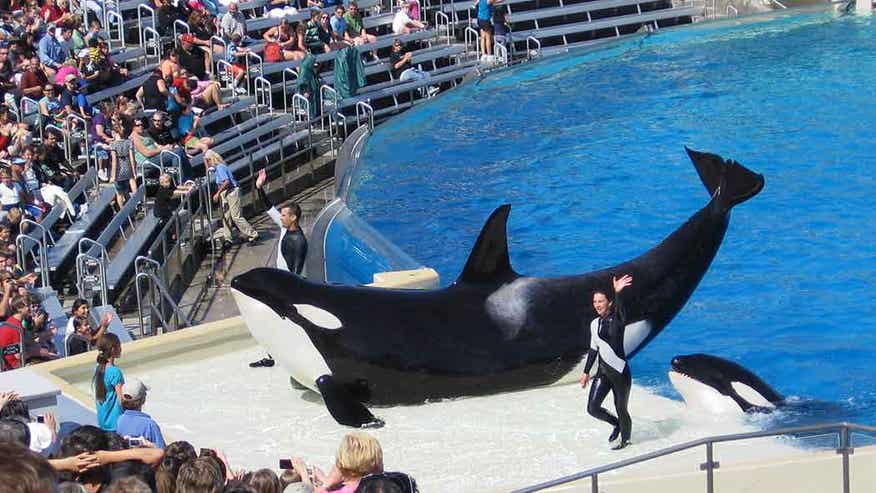
SeaWorld says its theme park attendance is still falling as animal activists protest the company's treatment of whales, but the company says some of its parks are doing better as it prepares to launch a pair of new roller coasters.

The company also maintained its annual outlook, and its shares rose more than 4 percent.
SeaWorld has been trying to recover from the 2013 documentary film "Blackfish" that suggested its treatment of captive orcas provokes violent behavior. Park attendance dropped after the release of the documentary and the company's stock has fallen 50 percent over the last two years.

The company says attendance at the original Sea World, in San Diego, is still hurting. Legislators in California have proposed banning performances featuring orcas, which has kept criticism of SeaWorld in the news. The company says business in its Florida parks was better in the second quarter and says the biggest problem at those locations is tough competition, not fallout from "Blackfish." Its overall attendance fell about 2 percent.

New President and CEO Joel Manby said in May that competing theme parks in Orlando have done a better job of adding exciting attractions. The company is preparing a shark-themed roller coaster at SeaWorld Orlando and an Egypt-themed coaster at Busch Gardens Tampa. Both are scheduled to open in 2016.

A year ago the company also said it will build new, larger orca environments at its parks. The first such tank will be in San Diego and it will open to the public in 2018.
SeaWorld Entertainment Inc. runs 11 theme parks, including three SeaWorld locations and two Busch Gardens parks. Its second-quarter profit and revenue both fell short of expectations. On top of the hit to its reputation, SeaWorld said heavy rain in Texas and earlier Spring Break vacations hurt attendance at its parks.

  • Digg
  • Del.icio.us
  • StumbleUpon
  • Reddit
  • RSS
Post Icon

How to add a backup camera to your car


Rearview, or backup, cameras have become increasingly common on new cars, adding a measure of safety and convenience when reversing. If your late-model car is not so equipped, there’s an aftermarket retrofit available that will work as well as a factory original. 
Mounting evidence shows that rearview cameras help avoid accidents that involve backing into an object or—worse—a child invisible from the driver’s seat. According to National Highway Traffic Safety Administration (NHTSA), if all cars had rearview cameras, about 60 lives a year could be saved in the U.S. We consider a rearview camera a must have, especially for an SUV, pickup truck, or any other vehicle with a big blind zone straight back. But beyond the life-saving potential, a rear camera is a welcomed convenience that you would appreciate every day, as you back out of or into parking spots.
If your car was produced in the last decade, chances are it already has a display screen in the dash used for at least audio functions. These screens can often be used with camera retrofit kits, enabling a very tidy installation. Good packages start around $120 for the Japanese brands and go up to about $600 for the German brands. The kits contain the lens, a camera module for the screen and all necessary wiring and connectors. No splicing of wires is required. This style is much better than some cheapo alternatives that can leave a lens dangling above the license plate or attach a fuzzy screen to the rearview mirror.
Typically, installing a proper rear camera demands some advanced do-it-yourself skills and will take about three hours due to the careful removal of the rear hatch lining and other trim running all the way to the dashboard. This requires care and expertise. But not everyone has the time or skills to take on such a project in their own driveway. Unfortunately, franchised car dealers are reluctant to install these aftermarket retrofits, and we’ve found nationwide chains like AutoZone and Pep Boys won’t perform such installations, either. The good news is that Best Buy’s Geek Squad will do the installation for $99. Many local car audio/electronics shops can also perform the installation.
Here’s a list of vehicles that already have the infrastructure to be compatible with a model-specific aftermarket rearview camera:
BrandPrerequisiteAs of . . .
Chrysler/Dodge/JeepmyGig screen2006 and later
Ford/LincolnMyFord/MyLincoln Touch2011 and later
Buick/Cadillac/Chevrolet/GMCColor screen2007 and later
HondaColor screen2011 and later
MazdaColor screen2012 and later
Mercedes-BenzCOMAND screen2006 and later
SubaruColor screen2013 and later
Toyota/LexusColor screen2008 and later
Volkswagen/AudiRadio/navigation screen2009 and later
I bought such a kit online from BimmerTech for my wife’s 2011 BMW X3 for about $600. Having a shop and a few qualified technicians at the Consumer Reports Auto Test Center certainly made installation a lot easier than it would be otherwise. The kit contains a camera integrated into a rear-hatch handle, a few wiresets, and a computer module.
Once installed, the camera automatically took over the screen when the car was put in Reverse. The model I bought came with optional guidelines on the screen, aiding backup maneuvers. All told, this was a nice upgrade that was worth the investment.
Many brand-specific retrofit modules are available. Just search online for your car's model and "rear camera retrofit." You can also find them from major online retailers, such as Amazon and Crutchfield, or specialty online sites, such as Coastal Tech (focus on Detroit 3 upgrades). 
If you had new-car envy because of this helpful feature, know that there are upgrades available.

  • Digg
  • Del.icio.us
  • StumbleUpon
  • Reddit
  • RSS
Post Icon

How automakers are trying to stop hackers from taking over your car


When researchers at two West Coast universities took control of a General Motors car through cellular and Bluetooth connections in 2010, they startled the auto industry by exposing a glaring security gap.
Five years later, two friendly hackers sitting on a living room couch used a laptop computer to commandeer a Jeep from afar over the Internet, demonstrating an even scarier vulnerability.
“Cars don’t seem to be any more secure than when the university guys did it,” says Charlie Miller, a security expert at Twitter, who along with well-known hacker and security consultant Chris Valasek, engineered the attack on the Jeep Cherokee.
Fiat Chrysler, the maker of Jeeps, is now conducting the first recall to patch a cybersecurity problem, covering 1.4 million Jeeps. Experts and lawmakers are warning the auto industry and regulators to move faster to plug holes created by the dozens of new computers and the growing number of Internet connections in today’s automobiles.

  • Digg
  • Del.icio.us
  • StumbleUpon
  • Reddit
  • RSS
Post Icon

2015 Land Rover Discovery Sport Test Drive


You can’t always start at the top, but it’s nice to know you have a chance to get there.
The Discovery Sport is Land Rover’s new entry-level model, and the first in its soon-to-grow Discovery line of street-smart crossovers. It mixes country club style with just enough off-road cred to earn the Land Rover logo.
Inside, the compact SUV is as snazzy as a boutique hotel bar, and the trimmings live up to its $38,065 starting price. It’s primarily a five-seat vehicle, with a roomy, adjustable second row, but two-seat third row is available for $1,750. They’re handy, but so small that Land Rover accurately refers to them as +2. The cargo bay they fill may be better left empty, and provides a nice big space when it is. Packing for a week-long trip for a family of four or five should be no problem.
Don’t let the name fool you. “Sport” in this case really means “fun size,” and there will be a larger Discovery model arriving next year. Nevertheless, its 240 hp turbocharged four-cylinder engine and nine-speed automatic transmission combo provides enough punch to keep things lively, even though it likes to hunt for fuel economy in the upper gears, where it finds 26 mpg on the highway. Floor it to pass or merge, for instance, and it can take a good three or four count before anything particularly sporty happens, even in Sport mode.
Whether you are or aren’t doing that, the Discover Sport is supremely quiet inside, with a smooth and composed ride, even on twisty roads. This is despite the fact that it has 8.3 inches of ground clearance and some serious, stone-stepping wheel articulation to go with it.
It’ll also wade through nearly two feet of water, thanks to hefty door seals and an air intake positioned out of the splash zone, high and to the side of the engine bay. The standard all-wheel-drive system offers modes for a variety of surfaces, including gravel, sand, snow and grass, the last perfect for navigating outdoor music festival parking areas and creating general mayhem on a Scottish Moor or your local golf course.
I refrained from doing that, but did take it into the deepest darkest forests of New Jersey. (Hey, they have wild bears there. Take that, Scotland.) On a particularly steep and rocky trail it proved that it has more mettle than anything in its class, if not a Range Rover or Jeep Grand Cherokee. I wouldn’t go looking for trouble in it, but you should be fine if you make a wrong turn.

  • Digg
  • Del.icio.us
  • StumbleUpon
  • Reddit
  • RSS
Post Icon

The surprising history behind bananas

Did you know when you purchase a banana you are buying a relic of hegemonic empires? 
This humble fruit, born of an inedible seed, has been at the epicenter of exploitation for centuries. Cultivated for its delectable fruit, then exploited for its market power, the banana plant and its tumultuous history make for a wild tale much bigger than that peanut butter and banana sandwich you packed for lunch.
There are almost a thousand varieties of bananas in the world, but the most popular by far is the yellow banana commonly found in the grocery store, known as the Cavendish banana. So how did this tropical fruit end up with a distinctly British-sounding name? Simple: After William Cavendish, sixth Duke of Devonshire, received a shipment of the tropical fruit, he had his personal gardener cultivate this variety of banana in the greenhouse, and the rest is history. With over 150 countries producing bananas, they are one of the world’s most popular fruits.
A lot happened before that perfectly ripe yellow banana arrived at your local supermarket. Today, exploitation and disease continue to threaten the banana industry, but how exactly did the banana go from wild botanical berry to a staple in every kid’s lunchbox? 
We have the answers here:
  • 1. Banana: Origins of the Popular Fruit

    iStock
    Bananas, which are considered botanical berries, are most likely native to Australia, but were first cultivated in Papua New Guinea. Journalist and food historian Dan Koeppel explains in his book, Banana: The Fate of the Fruit That Changed the World, that many scholars believe that bananas were actually Eve’s apple in the Garden of Eden.
  • 2. Banana: Cultivation

    iStock
    The cultivation of bananas began centuries ago, but once countries realized the market power of this versatile fruit, people became greedy. Today, the monoculture production methods have destroyed ecosystems and left already-poor countries dependent on this single crop export.
  • 3. Banana: The Rise of Banana Republics

    iStock
    When countries like the United States realized that the warmer climates of Central America could produce better-tasting fruit faster, big companies moved into nations like Honduras, trading roads and infrastructure for land. Cultivation of bananas quickly led to the rise of two dominant forces in the banana industry: Dole and United Fruit Company (i.e. Chiquita). These so-called banana republics, mostly in Central America, became entirely dependent on banana cultivation by the turn of the twentieth century.
  • 4. Banana: Plantain vs. Banana

    iStock
    In reality, there is very little need to differentiate between these two fruits, because of the hundreds of varieties. However practically, plantains usually refer to the larger, greener, and less sweet banana species you see at the grocery store. In Latin cooking, plantains are used for tostones. The dark-skinned “dessert” plantains are used for maduros.

  • Digg
  • Del.icio.us
  • StumbleUpon
  • Reddit
  • RSS
Post Icon

From inedible food to excessive waste, shocking cooking show secrets revealed


A post on social media site Reddit asked people who have worked on the set of food shows to reveal the strangest things they’ve seen while working.
And the responses didn’t disappoint.
According to user ‘Elroypaisley’ who worked on a daytime talk show with daily cooking segments, most the hard work is done by a food stylist behind the scenes.
“Most of the food is either A) not edible (under cooked chicken, just browned on the outside to look good for camera or sprayed with shining spray to make it look glossy) or B) Eaten by the crew,” wrote the redditor.
“The most enlightening fact, for me, was that many of the chefs have no idea what the recipe is, what they are cooking when they arrive, or how it’s made. A food stylist shows up two hours before taping, having been up the night before all night making the ‘beauty dishes’ — these are the dishes the camera will take shots of to show what the final product looks like. Then the stylist lays out every ingredient, every bowl, every tool that will be needed.
“The chef arrives, does hair/makeup and comes to set where the stylist briefs them. ‘Chef, today you’re making such and such. These are the ingredients for the reduction sauce, etc’. The chef goes over the recipe a few times, then we go live and they are the expert.”
User ‘Landlubber77’ worked as a production intern on a food network and said the dish prepared on screen by the chef isn’t usually the one featured in the fancy photos.
“When they want to stage shots of just the food on its own, the ‘hero shot’, they have an intern make a duplicate of the meal (doesn’t matter if it’s undercooked inside because nobody is gonna eat it) which just has to look good on the surface. They then spray it with an aerosol can of some ungodly preservative to make it ‘stay.’
“You could come back a year later and it would still be camera ready.”
When it comes to shows such asMasterChef, ‘absinthevisions’ wrote that “each dish can be made several times so there is a lot of waste”.
“If it’s a contest style show, the judges don’t eat the version that you see cooked and plated. That version is thrown away and a new version is cooked specifically for them to eat. Then they take 2-3 bites from a plate and throw the rest away.”
If you’ve ever seen a cooking show where the chef is given a special ingredient at the start of the show and you’ve been amazed by how quickly they brainstormed and executed their dish, well ... don’t be amazed.
“My brother was a sous chef for his (at the time) boss on a popular food competition show,” wrote Reddit user ‘LadyofRivendell’.
“He said the secret ingredient was revealed a few hours prior to filming and the chefs sat down with their sous chefs and made plans ahead.”
But the best story in the thread was from a caterer called ‘Astrochef12’ who was hired in the early 2000s by The Oprah Winfrey Show to help make a number of different celebrities’ favorite recipes for the studio audience.
“I made pancakes (I think) for Harry Connick Jr, Gwenyth Paltrow’s Miso crusted-Cod and most famously Tom Cruise’s Grandmother’s spaghetti carbonara,” they wrote.
“Usually I would be the one to go to the show with a few cooks; warm everything up and plate some 360 tasting sized portions for the audience. The food would be served during a commercial break in two and a half minutes, so the pressure was pretty intense.
“Tom Cruise’s spaghetti carbonara sticks in my memories because the call came in during a lull and a bunch of staff was on vacation. We would get the call and have to have the food ready for taping that same week, so it was just me on the job.
“They requested enough spaghetti carbonara for 360 guests, plus the Mise en Place (prepped ingredients) for Tom to demo it himself on camera. They also sent the recipe, which had been dictated by an assistant and emailed.
“When I read the recipe I went into apoplexy as his recipe was flawed ... He had stated that the beaten eggs be poured into the sauteed olive oil/bacon/anchovies then stirred into the pasta (which would result in scrambled eggs). Normally the eggs are mixed in after the pasta is added, then you toss everything around and the eggs, cheese, olive oil and bacon fat make a very rich sauce.
“So I am faced with a dilemma. Do I make the recipe his way so that the audience gets the same messed up preparation or do I make it the right way and show up the biggest star ever on a major client’s very popular show?
“The populist in me won. Screw Tom Cruise.
“I packed everything up and sent it off to the show with another event chef. The chef calls me as soon as they were done: Sure enough, they roll out the demo setup and he (Tom Cruise) starts sauteing the olive oil, garlic, anchovies and bacon til everything melts down. He adds the eggs and ... scrambled eggs! He’s like ‘Uh oh! That’s not right?’ and Oprah reaches under the cart and pulls out a bowl of my spaghetti carbonara and he says, ‘Oh yeah, that’s what it is supposed to look like!’
“I’m jumping up and down and screaming and yelling, fist pumping.”


  • Digg
  • Del.icio.us
  • StumbleUpon
  • Reddit
  • RSS
Post Icon

Suicide car bomb near Kabul airport kills 5, Taliban claims responsibility

The Afghan president called on Pakistan on Monday to crack down on the Taliban after a suicide car bombing earlier in the day near Kabul's international airport killed five people, the latest in a wave of deadly attacks in the capital.
In a televised address, Ashraf Ghani also blamed neighboring Pakistan for what he described as Islamabad's support to the insurgents whose war against Kabul is now nearing its 14th year, and said he was sending a delegation to Islamabad later this week to demand a stop to this.
"We know they have sanctuaries there, we know they are active there," Ghani said, referring to Taliban leaders living in Pakistan. "We need all those activities to be stopped."
There was no immediate reaction from Islamabad. Pakistan has in the past denied supporting the Taliban.
Since assuming office a year ago, Ghani has pursued closer relations with Pakistan, which wields influence over the insurgent group, hoping that it could use that influence to bring the Taliban into peace negotiations.
Pakistan hosted the first official round of Kabul-Taliban negotiations last month, but a second round that was due at the end of last month was indefinitely postponed after the Afghan government announced the death over two years ago of the reclusive Taliban leader, Mullah Mohammad Omar.
The one-eyed Mullah Omar had hosted Osama Bin Laden's al Qaeda in the years leading up to the Sept. 11, 2001, attacks. He had not been seen in public since fleeing over the border into Pakistan after the 2001 U.S.-led invasion that ousted the Taliban. Since the announcement of his death, the Taliban have been torn by infighting and rivalries for the leadership post.
On Monday, Ghani appeared to take a step back on the peace talks.
"We don't want Pakistan to bring the Taliban to peace talks, but to stop the Taliban's activities on their soil," he said.
Only hours earlier, a suicide car bombing at a busy roundabout near the entrance to the Kabul airport killed at least five people and wounded 16, officials said. The Taliban quickly claimed responsibility for the attack.
The Kabul provincial police chief, Abdul Rahman Rahimi, told The Associated Press that a car packed with explosives blew up at the busy intersection.
It was the latest in a series of deadly attacks on the capital, which since Friday have killed more than 50 people and wounded hundreds.
The Taliban have claimed responsibility for all the attacks but one -- a truck bomb explosion that flattened a city block, killed 15 people and wounded 240 as they slept in the early hours of Friday.
It is widely believed the truck in that attack detonated prematurely -- CCTV footage shown on Afghan television purportedly showed the truck hitting a speed bump and then blowing up.
Earlier this month, the Afghan intelligence service disclosed that Mullah Omar had been dead for more than two years. The disclosure, later confirmed by the Taliban, triggered the internal succession dispute and raised questions about the future direction of the insurgency.
Ghani said the recent attacks showed "the war has changed shape."
"The enemy who was fighting to gain territory and claim victory, has now had its backbone broken," he said of the insurgent group. "It is so desperate now that it has turned to cowardly attacks against innocent people just to weaken people's morale."

  • Digg
  • Del.icio.us
  • StumbleUpon
  • Reddit
  • RSS